

If someone in your local area urgently needs an accountant, perhaps for tax planning, self-assessment, or business compliance, the first place they usually turn is Google. They type a direct search like “accountant near me” or “tax adviser for small business”. What they see next often determines who gets their call. Increasingly, the firms appearing at the very top of those search results are using pay-per-click (PPC) advertising to secure that visibility.
PPC advertising allows accounting firms to place their services directly in front of people who are actively searching for professional help. According to recent Google Ads data, high-intent service searches (such as accounting and legal services) continue to deliver some of the strongest conversion rates because users are already motivated to take action. This makes PPC a particularly powerful digital marketing channel for accountants who want predictable, measurable leads.
Unlike long-term strategies such as SEO, PPC offers immediate exposure and control. You decide who sees your ads, when they see them, and how much you spend. For accountants, this means the ability to attract serious prospects, business owners, landlords, contractors, and individuals at the exact moment they need expert support.

In this guide, you’ll learn what PPC advertising really means for accountants, how it works in practice, and why it is one of the most effective ways to attract high-intent clients. By the end, you’ll have a clear understanding of whether PPC fits into your firm’s marketing strategy and how to use it wisely.
What Is PPC for Accountants and How Does It Work?
At its core, pay-per-click advertising is a digital advertising model where you only pay when someone clicks on your advert. For accountants, this usually involves running ads on platforms such as Google Ads or Microsoft Advertising, where your firm appears at the top of search engine results for specific accounting-related searches.
Unlike traditional advertising, such as print ads or billboards, PPC is highly targeted and measurable. Your ads are shown to users based on the exact words they type into search engines, their location, the time of day, and even the device they are using. This precision is especially valuable for professional service firms, where trust, relevance, and timing matter greatly.
For example, an accounting firm in Manchester can run PPC ads that only appear to users within a defined radius who search for terms like “chartered accountant Manchester” or “tax return help UK”. This ensures your advertising budget is focused on people who are most likely to become clients.
PPC advertising for accountants typically includes:
- Search ads that appear at the top of Google results
- Location-based targeting to attract nearby clients
- Service-specific campaigns for tax, bookkeeping, payroll, or advisory work
A key advantage of PPC is transparency. Platforms such as Google Ads provide detailed performance data, allowing accountants to see exactly how many clicks, enquiries, and conversions their campaigns generate. You can learn more about how Google Ads works directly from Google’s official guide:
How Google Ads PPC works for service businesses
This level of clarity makes PPC especially suitable for firms that want accountability from their marketing spend and prefer data-driven decisions.
Why PPC for Accountants Delivers High-Intent Leads
One of the biggest reasons PPC advertising is effective for accountants is the intent behind the searches it targets. When someone clicks on a PPC ad for accounting services, they are not casually browsing, they are actively looking for help. This is what marketers call high-intent traffic, and it is far more likely to convert into enquiries and paying clients.
PPC allows accounting firms to position themselves in front of prospects at critical decision-making moments. Someone searching “urgent tax advice UK” or “small business accountant London” is already aware of their problem and is seeking a solution. PPC simply places your firm in front of them at the right time.
Another strength of PPC is speed. While search engine optimisation can take months to produce results, PPC campaigns can start driving traffic within days. This makes PPC particularly useful for:
- New accounting firms are building visibility
- Firms launching new services
- Seasonal demand, such as self-assessment deadlines
PPC advertising is also highly controllable. Accountants can set daily budgets, pause campaigns at any time, and focus on their most profitable services. This level of flexibility helps firms avoid wasted spend while still maintaining consistent lead flow.
In addition, PPC supports trust-building. Well-written ads that highlight qualifications, experience, and client-focused messaging can immediately establish credibility. When combined with strong landing pages and clear calls to action, PPC becomes a powerful client acquisition tool rather than just an advertising expense.
For deeper insight into why high-intent search traffic converts so well, Google provides useful guidance here:
Google Ads high-intent search traffic guide
Best PPC Platforms for Accountants: Google Ads and Beyond
Now that you understand why PPC works so well for attracting high-intent clients, the next step is choosing the right PPC platforms for your accounting firm. Not every platform will suit every goal, and choosing wisely helps you avoid wasted spend while reaching the right audience.
For most accountants in the UK, Google Ads is the primary and most effective PPC platform. This is because Google dominates search behaviour, especially for professional services. When people actively need an accountant, Google is usually their first stop. Running PPC advertising on Google allows your firm to appear for searches such as “tax accountant near me” or “limited company accountant UK”, which signals strong intent.
That said, other platforms can support your wider PPC strategy depending on your services and audience. Microsoft Advertising (Bing Ads), for example, often has lower cost-per-click and can perform well for certain demographics, particularly older business owners and professionals who use Microsoft products by default.
When choosing PPC platforms, accountants should consider:
- Where potential clients are actively searching for accounting services
- The level of intent behind searches on each platform
- Budget control and transparency of reporting

For most firms, starting with Google Ads is the safest and most profitable choice, then expanding once results are stable. Google provides a clear overview of its advertising ecosystem here:
Google Ads platform for UK accountants
The key takeaway is that PPC advertising works best when it meets clients at the moment they are actively looking for help, not when they are casually browsing.
How to Choose Profitable PPC Keywords for Accountants
Once you’ve chosen your PPC platform, the success of your campaign depends heavily on keyword selection. Keywords determine when your ads appear, who sees them, and how much you pay per click. For accountants, choosing the right keywords is about balancing intent, relevance, and cost.
Profitable accounting PPC campaigns focus on service-based keywords rather than vague or informational ones. Someone searching “what does an accountant do” is very different from someone searching “self-assessment accountant London”. The second person is far more likely to become a client.
High-performing PPC keywords for accountants often include:
- Service + location terms (for example, “chartered accountant Birmingham”)
- Problem-driven searches (such as “help with tax return UK”)
- Business-specific phrases (like “small business accountant”)
Keyword research tools such as Google Keyword Planner help accountants understand search volume, competition, and estimated cost. This tool is free within Google Ads and is essential for planning realistic budgets and expectations:
Google Ads landing page quality score guide
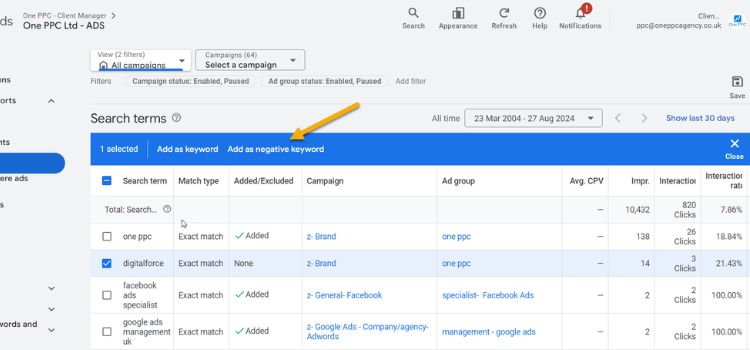
It’s equally important to avoid wasting money on irrelevant clicks. This is where negative keywords come in. For example, excluding terms like “jobs”, “courses”, or “free” prevents your ads from showing to people who are not looking to hire an accountant.
Strong keyword selection ensures your PPC advertising budget is spent on people who are most likely to enquire, not just people who are curious.
Creating High-Converting Google Ads and Landing Pages for Accountants
Even with the right platform and keywords, PPC advertising only works if your ads and landing pages convert. This means turning clicks into enquiries, calls, or booked consultations.
Effective PPC ads for accountants are clear, specific, and reassuring. They should quickly answer three questions in the searcher’s mind: Who are you? How can you help me? Why should I trust you? Avoid vague claims and focus on practical benefits instead.
High-converting accounting PPC ads typically:
- Clearly state the service offered (for example, tax, bookkeeping, advisory)
- Highlight trust signals such as qualifications or years of experience
- Include a clear call to action like “Book a free consultation”
However, the work doesn’t stop at the ad. Landing pages play a crucial role in PPC success. Sending traffic to your homepage often leads to poor results. Instead, each PPC campaign should direct users to a dedicated landing page that matches the search intent exactly.
A strong PPC landing page for accountants should:
- Focus on one service and one goal
- Use simple language and clear headings
- Reinforce trust with testimonials or professional credentials
- Make it easy to contact you via forms or phone calls
Google emphasises the importance of landing page experience as part of ad quality and cost efficiency, which you can read more about here:
Google Keyword Planner for PPC research
When ads and landing pages work together, PPC becomes far more than paid traffic; it becomes a predictable lead-generation system that supports sustainable business growth.
Conclusion
Pay-per-click advertising may seem complex at first, but as you’ve seen throughout this guide, it becomes far more manageable when broken down into clear, practical steps. From understanding what PPC advertising means for accountants, to choosing the right platforms, selecting profitable keywords, and creating ads and landing pages that convert, every part of the process works together to help your firm attract the right kind of clients at the right time.
What makes PPC especially powerful for accounting firms is intent. You are not interrupting people who are casually scrolling, you are showing up for individuals and businesses who are actively searching for professional accounting support. When done properly, PPC stops being an expense and starts becoming a predictable investment that delivers measurable results.
The most important thing to remember is that you don’t need to get everything perfect from day one. Start small, focus on one core service, track performance closely, and improve based on real data. Each campaign you run gives you insights into what your ideal clients respond to, helping you refine your message and strengthen your overall marketing strategy.
Now is the best time to put what you’ve learnt into action. Whether you choose to manage your first PPC campaign yourself or work with a specialist, you now have the knowledge to ask the right questions, make informed decisions, and avoid costly mistakes. With a clear strategy and consistent optimisation, PPC advertising can become one of the most effective tools for growing your accounting firm with confidence and control.
FAQ
How much does PPC advertising cost for accountants?
PPC for accountants in the UK typically costs £2–£15 per click, depending on location and service, with most small firms starting with £500–£1,000 monthly budgets on Google Ads.
Is Google Ads worth it for accounting firms?
Yes — Google Ads for accountants is highly effective because it targets people actively searching for accounting services, delivering high-intent leads with measurable ROI.
What are the best PPC keywords for accountants?
The most profitable PPC keywords for accountants include service and location combinations such as “chartered accountant London”, “tax return help UK”, and “small business accountant near me.”
How long does it take for PPC to work for accountants?
Unlike SEO, PPC for accountants can start generating leads within 24–48 hours of launching a campaign on Google Ads.
Should accountants manage PPC themselves or hire a specialist?
Small firms can start with Google Ads self-serve, but hiring a PPC specialist often delivers better ROI for accounting firms spending over £1,000 per month.
Meet Stanley

Stanley is the founder of Warrior Profit, a digital marketing agency in Lagos.
He specialises in helping accounting firms that struggle with getting high-paying clients, clarify their message, attract premium clients and scale their firms profitably.
He regularly shares his knowledge and best advice here on his blog and on other channels such as LinkedIn, Facebook and Instagram.
Book a call today to learn more about what Stanley and Warrior Profit can do for you.