

Email marketing remains one of the most effective digital marketing channels for businesses today. In fact, recent industry reports continue to show that email marketing delivers one of the highest returns on investment compared to other digital channels, especially when campaigns are properly planned and measured. Yet, many businesses still send emails without truly understanding whether their efforts are working or how they contribute to business growth.
This is where measuring email marketing success becomes essential. Without clear measurement, it’s easy to keep repeating the same campaigns, hoping for better results, while missing opportunities to improve engagement, conversions, and customer loyalty.
The good news is that email marketing performance is highly measurable. With the right approach, you can clearly see how your email campaigns support your wider marketing goals, where subscribers are engaging, and where improvements are needed. When you understand what the numbers are telling you, email marketing stops being guesswork and becomes a reliable growth tool.
In this guide, you’ll learn what measuring email marketing success really means for your business and which key email marketing metrics matter most. By the end, you’ll feel confident using data to make smarter decisions and create stronger email campaigns that deliver real results.

What Email Marketing Success Means for Business Growth
Measuring email marketing success goes far beyond checking whether an email was sent or delivered. At its core, it means understanding how your email campaigns contribute to meaningful business outcomes such as customer engagement, lead generation, sales, and long-term retention.
For business growth, email marketing works best when it supports clear objectives. These objectives might include nurturing leads, encouraging repeat purchases, promoting new services, or strengthening relationships with existing customers. Measuring performance allows you to connect each campaign to these goals and see what is actually driving results.
When you track email marketing performance consistently, you gain clarity in several important areas. You begin to understand what type of content resonates with your audience, which subject lines encourage opens, and which messages prompt action. Over time, this insight helps you refine your strategy, improve targeting, and make better use of your marketing budget.
Measuring success also plays a critical role in decision-making. Instead of relying on assumptions, you can use real data to guide improvements. For example, if engagement is low, the issue might be timing, content relevance, or audience segmentation. If conversions are strong, you can identify what worked and replicate it in future campaigns.
Most importantly, measuring email marketing success creates consistency. Businesses that regularly analyse results tend to build more predictable growth because they are constantly learning and adjusting. Email marketing becomes a reliable channel that supports wider digital marketing efforts rather than an isolated activity.
Tools such as email marketing platforms and analytics dashboards make this process much easier today. Platforms like Mailchimp and Campaign Monitor provide built-in reporting features that help businesses link email performance directly to growth-related outcomes.
Key Email Marketing Metrics to Track
To measure email marketing success properly, it’s important to focus on the right metrics. These metrics help you understand how subscribers interact with your emails and how well each campaign performs against your goals. While there are many data points available, a small group of core email marketing metrics provides the most valuable insight.
The most important email marketing metrics to track include:
- Open rate, which shows how many recipients opened your email and gives insight into subject line effectiveness and brand recognition
- Click-through rate (CTR), which measures how many people clicked on links within your email and indicates content relevance and engagement
- Conversion rate, which tracks how many recipients completed a desired action, such as making a purchase or filling out a form
- Bounce rate, which highlights delivery issues by showing emails that failed to reach inboxes
- Unsubscribe rate, which helps you understand whether content is meeting subscriber expectations
- Return on investment (ROI), which connects email marketing performance to revenue and overall business impact
Each of these email marketing metrics plays a different role in understanding campaign performance. For example, a high open rate but low click-through rate may suggest that while your subject lines are strong, the email content needs improvement. On the other hand, strong conversion rates usually indicate that your message and offer align well with audience needs.
It’s also important to view these metrics together rather than in isolation. Email marketing success is rarely defined by a single number. Instead, patterns across multiple campaigns reveal what is working and where adjustments are needed. Over time, tracking these metrics consistently helps you establish benchmarks and recognise progress.
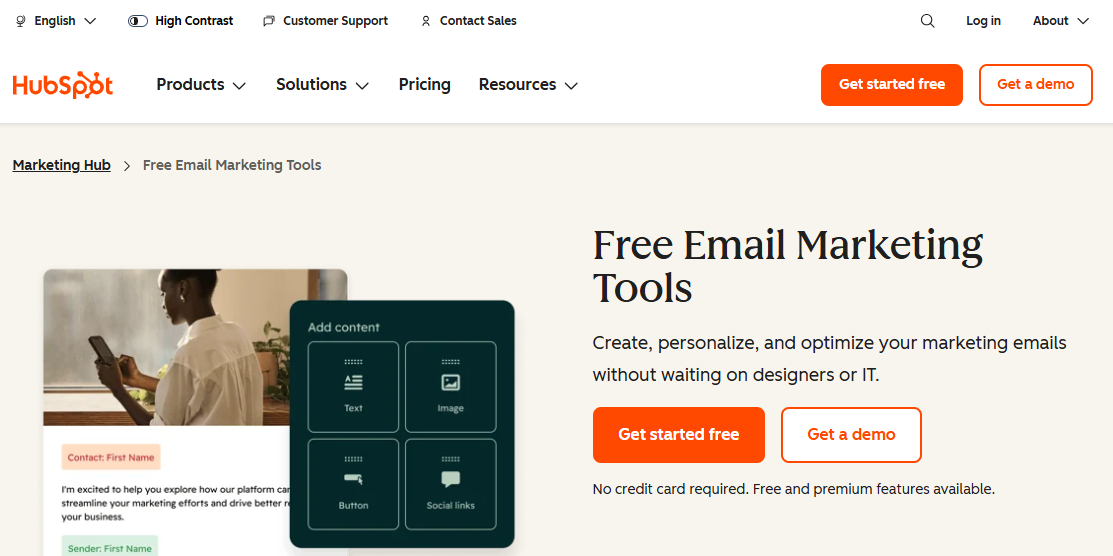
Most modern email marketing tools automatically track these metrics and present them in easy-to-read reports. Platforms such as HubSpot Email Marketing and ActiveCampaign allow businesses to monitor performance and gain actionable insights without requiring advanced technical skills.
Setting Email Marketing Goals and Benchmarks
Once you understand why measuring email marketing success matters and which metrics to track, the next step is to set clear goals before you send any campaign. Without defined goals, even the best email marketing data becomes difficult to interpret because there’s nothing concrete to measure against.
Clear email marketing goals give your campaigns direction. They help you decide what success looks like before the email lands in someone’s inbox. For example, an email designed to nurture leads should be measured differently from one promoting a limited-time offer. When goals are clear, every metric you track has context and purpose.
Setting effective goals starts with aligning email marketing efforts to wider business objectives. If the business goal is revenue growth, your email campaign goal may focus on conversions or sales. If the aim is stronger customer relationships, engagement metrics such as clicks and replies become more important.
Benchmarks then help you understand whether your results are good, average, or need improvement. These benchmarks can come from your own historical data or from trusted industry averages. What matters most is consistency. Comparing campaigns against your own past performance is often more useful than chasing generic figures.
A simple way to approach goal setting is to define:
- The purpose of the email campaign
- The primary metric that indicates success
- A realistic benchmark based on past results
Over time, this process makes email marketing performance easier to evaluate and improves decision-making. Email marketing becomes intentional rather than experimental, and growth becomes more predictable.
Best Email Marketing Analytics Tools
With goals and benchmarks in place, email marketing analytics tools become your most valuable resource. These tools collect, organise, and present campaign data in a way that helps you understand performance without needing advanced technical knowledge.
Most modern email marketing platforms include built-in analytics dashboards that show key metrics such as open rates, click-through rates, conversions, and engagement trends. These tools allow you to see what happens after an email is sent, often in real time, making it easier to spot patterns and issues early.
Email marketing analytics tools also help you compare campaigns over time. You can see which subject lines perform better, which content drives clicks, and which audience segments are most engaged. This level of visibility makes it much easier to improve future campaigns using real evidence rather than assumptions.
Popular email marketing tools used by UK businesses include:
These platforms not only track email marketing metrics but also provide reports that connect performance to broader marketing goals. When used consistently, analytics tools turn raw data into practical insight that supports smarter marketing decisions.
How to Interpret Email Marketing Data
Collecting data is only useful if you know how to interpret it. This is where many businesses struggle, not because the data is complex, but because they try to analyse too much at once. The key is to focus on what the data is telling you in relation to your original goals.
Interpreting email marketing data starts with looking for patterns rather than isolated results. One campaign with a low open rate may not be a problem, but repeated low open rates often point to issues with subject lines, timing, or sender trust. Similarly, strong open rates paired with weak click-through rates usually suggest that the email content is not matching subscriber expectations.
It’s also important to connect metrics together. For example, a healthy click-through rate but low conversions could mean the landing page experience needs improvement rather than the email itself. Looking at the full journey helps you identify where engagement drops off.
Effective interpretation involves asking simple questions:
- Are subscribers engaging more or less over time?
- Which content types perform best?
- Where are people losing interest or unsubscribing?
By reviewing email marketing performance in this way, you begin to see clear areas for improvement. Data stops being overwhelming and becomes a guide for refinement and optimisation.
How to Improve Email Campaigns Using Data
The final step in measuring email marketing success is using insights to improve future campaigns. This is where continuous growth happens. Each campaign becomes an opportunity to learn, adjust, and perform better than the last.
One of the most effective ways to improve email marketing performance is through testing. Simple A/B testing allows you to compare different subject lines, email designs, call-to-action wording, or send times. Over time, these small improvements can lead to significantly better engagement and conversions.
Performance insights should guide these changes. If data shows that shorter emails perform better, future campaigns can be adjusted accordingly. If certain audience segments respond more positively to specific topics, content can be tailored to match those interests.
Improvement also comes from consistency. Regular review of email marketing metrics, combined with small, intentional changes, leads to steady progress. Rather than overhauling everything at once, successful email marketers focus on incremental improvement backed by data.
By applying what you’ve learned from measuring email marketing success, email campaigns become more relevant, more engaging, and more effective. Over time, this creates a strong feedback loop where each campaign informs the next, driving long-term business growth through smarter email marketing.
Conclusion
Measuring the success of your email marketing efforts is not about chasing numbers for the sake of it. It is about understanding what your audience responds to, learning what truly supports your business goals, and using that knowledge to make smarter decisions over time. When you take the time to set clear goals, track the right email marketing metrics, and analyse performance with intention, your campaigns stop feeling like guesswork and start delivering consistent value.
The real power of email marketing lies in continuous improvement. Every campaign you send gives you insight into your audience’s needs, preferences, and behaviour. By reviewing your results, testing small changes, and refining your approach, you build stronger relationships and create email campaigns that feel more relevant and purposeful with each send.
You do not need perfection to see results. Start with one clear goal, track a few meaningful metrics, and use what you learn to improve the next campaign. Over time, these small, data-driven actions add up to better engagement, higher conversions, and stronger long-term growth.
Now is the ideal moment to put this into practice. Review your last email campaign, apply the principles you have learned, and move forward with confidence. When measurement becomes part of your email marketing routine, success becomes something you can clearly see, understand, and intentionally grow.
Meet Stanley

Stanley is the founder of Warrior Profit, a digital marketing agency in Lagos.
He specialises in helping accounting firms that struggle with getting high-paying clients, clarify their message, attract premium clients and scale their firms profitably.
He regularly shares his knowledge and best advice here on his blog and on other channels such as LinkedIn, Facebook and Instagram.
Book a call today to learn more about what Stanley and Warrior Profit can do for you.